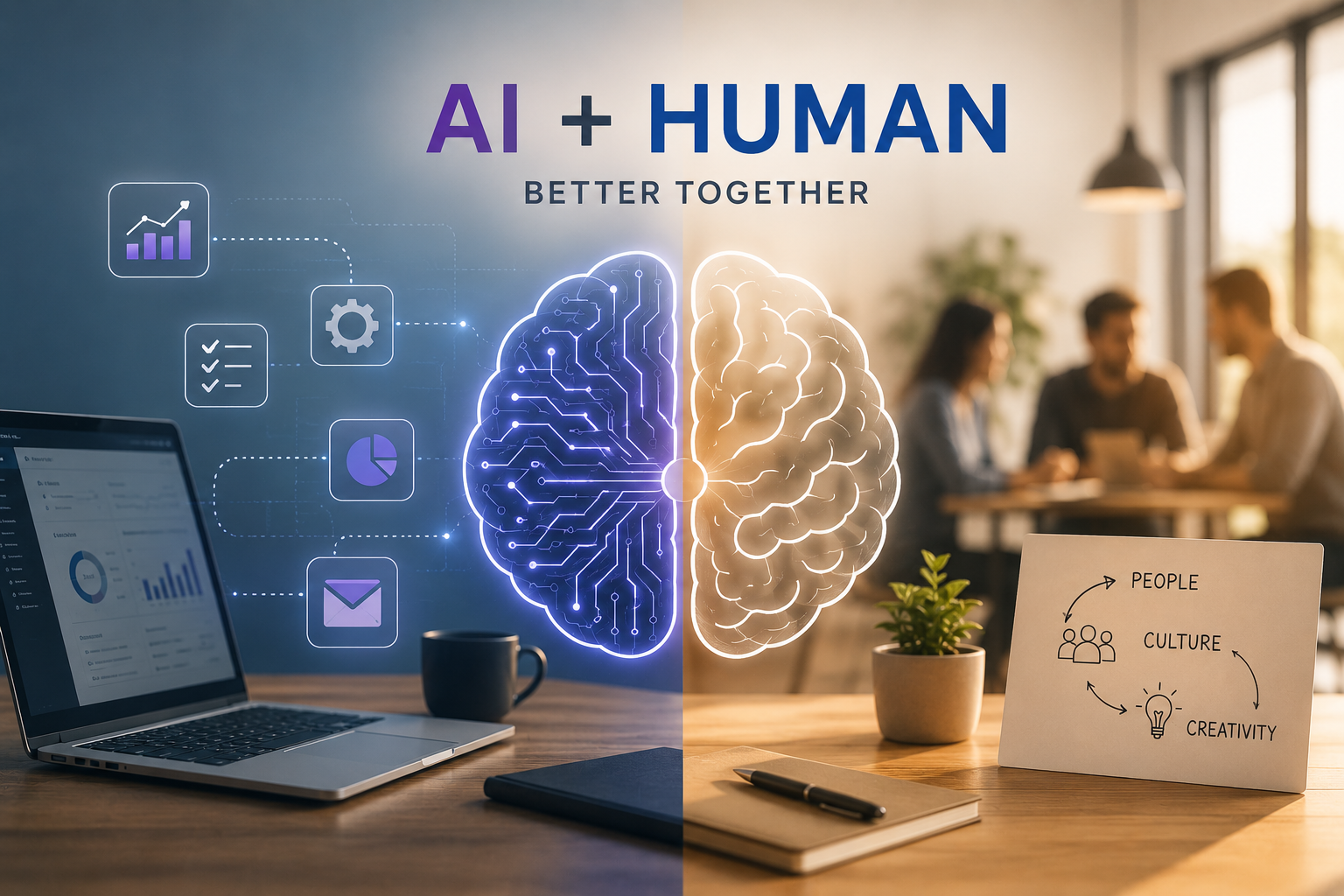
Automating startup operations is no longer a fringe experiment or a futuristic vision reserved for enterprise giants. It’s an operational imperative many early-stage companies grapple with as they seek to scale without hiring headcount at an unsustainable pace. But there’s a catch: Automation, especially when powered by AI, can easily strip away the essential human nuance that fuels creativity, company culture, and adaptive problem-solving. The question is not whether founders should automate, but where, how, and how much.
Which Startup Ops Roles Are Most and Least Suited to AI Automation?
Startup operations loosely defined encompass a broad array of functions: finance, HR, customer support, sales enablement, marketing, logistics, and internal communications, among others. The automation potential varies widely across these roles.
Finance, for instance, is a classic candidate for AI-driven efficiency. Tools that scan invoices, reconcile accounts, generate reports, or forecast cash flow dramatically reduce grunt work. Automation here is transactional and detail-oriented tasks that thrive on clear data inputs and minimal ambiguity.
On the other hand, roles tied deeply to human judgment like hiring, team development, or strategic decision-making are less fit for pure automation. AI can surface candidate matches or analyze employee sentiment, but nuanced assessment of cultural fit or leadership potential remains bellwether work for humans.
Customer support lies somewhere in the middle. Chatbots can field many routine queries and even simulate empathy to a degree. However, early-stage startups often depend on direct customer interactions to learn and iterate their product. Automating these touchpoints risks losing critical feedback loops and alienating users who sense robotic answers.
In sales operations, CRM automations can keep pipelines updated and personalize outreach based on predictive analytics. Still, the human element the art of persuasion and relationship-building holds outsized importance. Over-automation here can stifle flexibility and responsiveness.
The sweet spot for AI lies in repetitive, process-driven tasks with clear outcomes and fast feedback. The rough edges appear anytime operations demand interpretation, adaptability, or emotional intelligence. Startups must resist the temptation to shove every workflow through an AI filter just because it’s there.
Case Studies: Startups Combining AI Systems with Human Teams
Consider Notifi Labs, a B2B SaaS startup that integrated AI to automate contract analysis and compliance checks. The AI flagged discrepancies and helped legal teams prioritize documents. But crucially, human lawyers retained final judgment, focusing their bandwidth on complex negotiations rather than paperwork. The result was 30% faster legal workflows without sacrificing accuracy or accountability.
Then there’s ClearPath, a mid-stage marketplace platform that uses AI to tag customer support tickets and route them automatically to the correct team. The AI triages common questions, but any ticket involving escalations or nuanced problems bubbles up immediately to human agents. This blend has improved response times by 25% while preserving the high customer satisfaction scores critical for their growth.
In contrast, a well-funded direct-to-consumer brand tried to fully automate their influencer marketing operations using AI-driven content selection and outreach sequencing. The lack of real human oversight led to tone-deaf messaging and missed partnership opportunities. The company has since dialed back automation and introduced manual review stages.
These examples underscore a fundamental truth: AI works best as an assistant rather than a replacement in startup operations especially early on when every interaction carries disproportionate strategic weight.
Risks of Over-Automation in Early-Stage Companies
Over-automation is a stealthy pitfall. Early-stage startups operate in ambiguity and flux. The rigidity of automated processes may obstruct pivots or obscure warning signs.
- Over-automated workflows can create blindness to signals that don’t fit predefined rules. For example, automatically closing “solved” customer tickets based on NLP confidence scores risks ignoring recurring pain points lightly buried in language nuances AI misinterprets.
- Excess reliance on AI-generated analytics may breed complacency or false certainty in decision-making. Startups often need iterative tinkering informed by intuition and gut calls. Over-automation may dull this instinct.
- There’s also the cultural risk. Team members may feel sidelined or devalued when AI dictates large swaths of operational work without transparency or room for human input. This can erode engagement just as startups need scrappy ownership most.
- Technical failures bugs, training data bias, or unanticipated edge cases can amplify damage in automated operations. Without human oversight, errors compound unnoticed until they become crisis points.
The trade-offs are real. Automation saves time and cuts costs, but it also imposes constraints and may unintentionally ossify behaviors or workflows.
Maintaining Team Culture Amid Increasing AI Reliance
Preserving startup culture in an era of automations requires deliberate effort. AI touches often replace communication or decisions traditionally done face-to-face, risking the erosion of trust and camaraderie.
Founders should resist the allure of “set it and forget it” AI workflows. Instead, automation should be transparently framed as a tool to augment human roles, not replace them.
- Explicitly involving teams in deciding what to automate and what to keep human-centered nurtures shared ownership.
- Encourage asynchronous tools that empower independent judgment alongside AI recommendations rather than constraining them.
- Schedule regular calibration sessions where teams review AI outputs together to catch errors, debate nuances, and adapt models.
- Value rituals around human judgment calls whether that’s a weekly review meeting or storytelling about customer cases that highlight the irreplaceable roles people play.
When AI becomes part of the team culture, not separate from it, it can support authenticity rather than supplant it.
Practical Steps to Integrate AI Without Diluting Human Judgment
Applying AI thoughtfully means balancing efficiency gains with preserving judgment calls.
- Start small and specific. Pilot AI in narrow slices like expense approvals or inbound lead scoring where errors are manageable.
- Make human-in-the-loop mandatory for edge cases or outputs below confidence thresholds.
- Build feedback loops where employees flag automation misses or false positives, feeding into continuous improvement.
- Adopt explainable AI models or dashboards that demystify recommendations to users instead of opaque black boxes.
- Pair AI with domain experts to interpret outputs and contextualize them before action.
- Avoid automating entire workflows upfront. Instead, automate discrete steps while maintaining human checkpoints.
- Recognize that some roles (like fundraising strategy or creative branding) probably should never be automated but can benefit from AI tools that aid ideation or analysis.
This blend of prudence and experimentation aligns startups with emerging norms in AI governance and operational resilience.
Investor Perspectives on AI-Driven Startup Scalability
Investors today show nuanced views on AI in startup operations. On one hand, scalable automation signals capital efficiency and potential for speedy growth. Pitch decks flaunting AI-powered customer engagement or automated churn prediction models garner attention.
Yet savvy VCs also ask how AI fits into the startup’s broader strategy and human capital approach. Models that overlook human oversight or embrace “black box” automation invite caution.
Investors appreciate teams that build repeatable, transparent workflows rather than chasing buzzword AI. They value startups that can demonstrate:
- Measurable ROI from automation without sacrificing customer retention or culture.
- Governance processes ensuring AI outputs are audited and error-managed.
- Adaptability to pivot automation processes as business context changes.
Ultimately, AI is one piece of the scalability puzzle, not a silver bullet. Investors back founders who balance technical savvy with operational humility.
Looking Ahead: Hybrid Human-AI Operational Models
The operational future isn’t about humans or AI; it’s about hybrid states that leverage the complementary strengths of both. Startups will increasingly design workflows with built-in collaboration between AI systems and human teams rather than siloed automation.
Imagine a scenario where AI does real-time data analysis while product managers contextualize insights within market shifts; where AI pre-screens resumes but hiring managers interpret cultural fit through interviews; where customer support AI drafts responses swiftly but human agents review and customize replies.
Such hybrid models require reimagining organizational design, talent acquisition, and role definitions. They demand new skills at the intersection of AI literacy and operational agility.
We’ll also see rising importance of AI “translation” roles employees who interpret AI outputs, debug edge cases, and shape algorithms to human priorities. These jobs blur lines between technologists, strategists, and frontline staff.
For creators, marketers, and developers alike, embracing hybrid models means moving beyond passive tool usage toward active partnership with AI. It’s about recognizing AI as a collaborator with limits, not as an infallible oracle.
Conclusion
Automating startup operations, especially with AI, is not a binary choice but a nuanced practice of balance. Startups must navigate trade-offs between efficiency and flexibility, scale and culture, data-driven precision and human judgment. The startups that succeed won’t be those relying blindly on AI but those crafting thoughtful hybrid environments where human creativity and empathy remain central even as machines handle the drudge.
In 2026, this balancing act has moved from theoretical to practical. Founders and operators must shed the either/or mindset and embrace hybrid operational designs with the clear-eyed recognition that automation can enable but also constrain the uniquely human factors that make startups thrive. The future belongs to those who treat AI as a strategic teammate, not a substitute.